8285111617

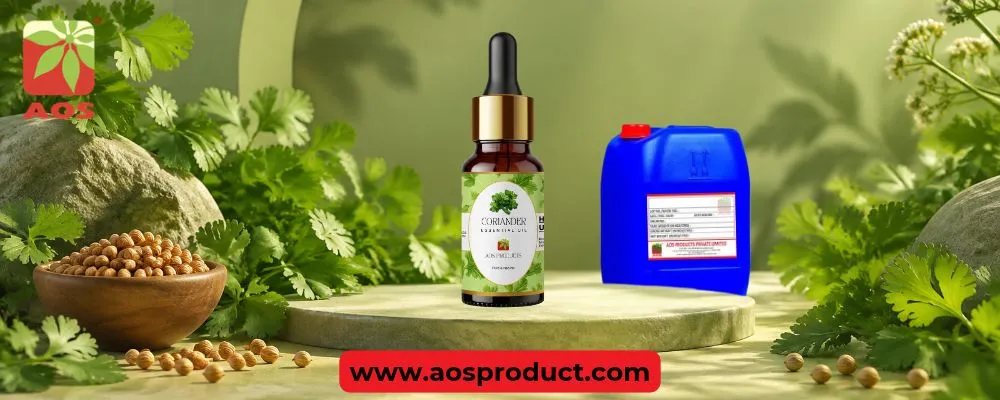
The extraction of coriander oil is performed by utilizing the steam distillation technique on dried seeds of the coriander plant (Coriandrum sativum). This oil has a sweet, fresh, warm, and slightly spicy fragrance and is widely utilized in cosmetics, personal care, food, fragrance, and medicinal industries.
Coriander oil is a natural product with great properties, and therefore, it is widely used by manufacturers and product creators. AOS Products provides natural materials and oils to be applied in various areas of business.
Coriander oil is a distilled aromatic oil produced from coriander seeds. It is light yellow, and its smell is pleasant and sweet.
Linalool is the main chemical in coriander seed oil. This chemical determines the oil's smell. The coriander seed oil may differ in terms of composition and quality depending on where the seeds come from and the methods of extraction.
The essential oil of coriander has several properties of interest:
There are many advantages to using Coriander oil within multiple sectors.
1. Beauty and Personal Care
This can be incorporated into beauty and personal care products such as creams, lotions, massage oil, and soaps.
2. Food and Drink
The distinct taste of coriander oil means that it can be used in food as a flavouring. It is also used within spice mixtures and seasonings. Again, food-grade standards must be adhered to where relevant.
3. Fragrance
Thanks to its sweet and spicy scent, coriander oil can be utilised within fragrances, deodorants, candles and soaps.
4. Pharmaceuticals
Research is undertaken into the possible bioactivity of coriander oil. Like with the other industries mentioned, it can then be included as a flavour and/or fragrance element in pharmaceuticals, again provided that relevant standards are followed.
5. Aromatherapy
Coriander essential oil is an element within aroma diffusers, massage oil and aromatherapy goods.
Interest in natural and botanical-based products continues to expand. Industries such as cosmetics, personal care, food, and fragrance are analysing essential oils in an attempt to produce innovative goods that have both scents and benefits.
Its adaptable nature, natural source, and nice scent all add to the significance of coriander oil within global and local markets.
Alongside other key considerations, those wishing to source bulk quantities of coriander oil should:
AOS Products specialises in providing essential oils and natural-based products for different industry sectors. We recognise the significance of high quality, along with uniformity and secure procurement.
If you work within the cosmetics, fragrance, personal care, or food industries, then it is key that you source an appropriate essential oil provider so as to continue to uphold required product quality and composition.
Along with a pleasant and zesty scent, coriander oil also has spicy notes. It can be utilised within many industries, including the cosmetic, food, perfume, and aromatherapy markets.
As there is growing popularity for ‘natural’ products, companies continue to explore the potential that coriander essential oil has to offer. AOS Products is one such company that can supply essential oils and natural products for industry.
Typically, coriander oil is obtained by steam distilling coriander seeds. The seeds are usually in a dried form.
Usually, linalool is the primary volatile constituent within coriander seed oil.
Cosmetics, fragrances, soaps, food, and some beauty items can all incorporate coriander oil.
Yes – due to its zesty and spicy scent, coriander oil can be used in perfumes, deodorants, soaps, and more.